Best Nano Banana Alternatives in 2026: 7 AI Image Editors Tested on 18 Photo Edits
Published October 19, 2026 · OutfitGen Team
A Nano Banana alternative is an AI image editor you reach for when Google's Gemini image model (Nano Banana 2 or the new Nano Banana 2.1) refuses an ordinary edit or gets it wrong. In OutfitGen's blind October 2026 benchmark, seven models refused none of their 90 requests and got up to 17 of 18 everyday photo edits right, against 13 of 18 for Nano Banana 2.1. This post ranks them and says where each falls short.
| Original photo | Seedream 5 Flash, asked for a red two-piece |
|---|---|
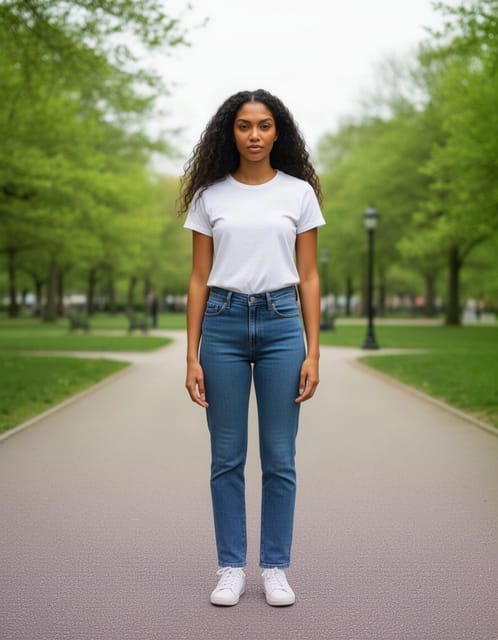 | 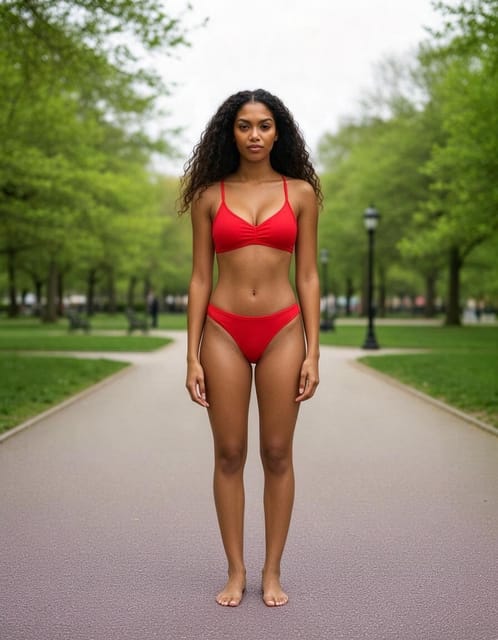 |
This is the request Nano Banana 2 and Nano Banana 2.1 refused in every run: a clothed adult, a plain red two-piece. Seven other models delivered it in every run. The source photo, the refusal tiles and every delivered result are on the over-refusal benchmark page.
Why people look for a Nano Banana alternative
Nano Banana is the public name of Google's Gemini image models. Nano Banana 2 (Gemini 3.1 Flash Image) became one of the most used photo editors in the world through the Gemini app, and Google replaced it with Nano Banana 2.1 on October 6, 2026 at about half the API price. It is a capable editor. On OutfitGen's 18-edit set it delivered every background change, every pose change and every change into everyday clothes it answered, 64 of 64, and the person stayed recognizable in every delivered run.
The complaints cluster in two places, and the benchmark measured both:
- Refusals on ordinary clothing requests. Nano Banana 2.1 refused 13 of 87 ordinary requests (15%): every request to put a clothed adult into a two-piece swimsuit, every catalog lingerie set, and every two-piece copied from a product photo. Nano Banana 2, re-run the same day, refused the same 13 requests. If Gemini has told you it can't help with your swimsuit photo, this is why. The request tripped the filter, not your picture.
- Edits that come back wrong. Returning an image is not the same as doing the edit. Blind judging rated 13 of 18 Nano Banana 2.1 edits fully done, against 15 for Nano Banana 2 and 17 for the leaders. It ranks 12th of 13 on the OutfitGen leaderboard.
Our guide to why AI photo editors reject ordinary swimwear edits has the practical advice. This post is the shopping list.
How we ranked the alternatives
Every model below ran the same test as every other model on the OutfitGen AI image editing leaderboard, version 1.1, snapshot of October 14, 2026:
- The edits. 18 everyday fashion edits on 10 synthetic adult photos: outfit changes, background changes and pose changes, including swimwear, gym wear and catalog lingerie cases.
- Repeats. Five runs per edit, 90 per model, 1,170 generations in all, because the same request can work once and fail the next time.
- Judging. A reviewer rated every delivered image without knowing which model made it. An edit counts as done right only if every delivered run did it.
- Refusals. A run the model declined on policy grounds counts as a refusal. Every request is an ordinary edit of an adult, so every refusal is a false positive.
- Speed. Median seconds per delivered edit through fal's hosted API, in the same session for every model (Nano Banana 2.1 was added in October and scaled through a same-day Nano Banana 2 control).
The ranking rule is the leaderboard's: edits done right, then refusal rate, then median time. Every number here is in the CSV and JSON downloads, so you can check it.
Twelve of the models ran on September 23, 2026 and Nano Banana 2.1 on October 14, 2026, all through fal's hosted endpoints at default settings. Consumer apps such as Gemini or ChatGPT add their own moderation on top of the model, so an app can be stricter than the numbers here.
Comparison table
| Editor | Best for | Edits right, of 18 | Refused, of answered runs | Median seconds | How to access it |
|---|---|---|---|---|---|
| OutfitGen | Changing outfits, backgrounds, poses and styles without picking a model | Not ranked (app, not a single model) | Not ranked | Not ranked | outfitgen.ai, in the browser, free to start |
| Flux 2 Flash | Speed | 17 | 0 of 90 | 4.0 | Black Forest Labs (bfl.ai), hosted APIs such as fal.ai |
| Flux 2 Turbo | Speed with more headroom | 17 | 0 of 90 | 5.8 | Black Forest Labs (bfl.ai), hosted APIs such as fal.ai |
| Seedream 5 Flash | Garment from a product photo | 17 | 0 of 90 | 15.2 | ByteDance (seed.bytedance.com), hosted APIs such as fal.ai |
| Seedream 5 Pro | Highest-fidelity Seedream output | 17 | 0 of 90 | 27.2 | ByteDance (seed.bytedance.com), hosted APIs such as fal.ai |
| Flux 2 | Base Flux 2 editor | 16 | 0 of 90 | 11.9 | Black Forest Labs (bfl.ai), hosted APIs such as fal.ai |
| Seedream 5 Lite | No-refusal fallback | 16 | 0 of 90 | 32.4 | ByteDance (seed.bytedance.com), hosted APIs such as fal.ai |
| Qwen Image 3 | Refusal-free editor from a third maker | 15 | 0 of 89 | 14.5 | Alibaba (qwen.ai), hosted APIs such as fal.ai |
| Nano Banana 2.1 | Reference-heavy edits, 4K output (Google's claims) | 13 | 13 of 87 | 11.5 | Gemini app, AI Studio, Gemini API |
OutfitGen is an app that runs and tests image models, not a single model, so it has no row in the single-model ranking.
1. OutfitGen: the app pick when you want the result, not the model
OutfitGen is a browser-based AI photo editor for outfits, poses, backgrounds and styles. You upload one photo, describe the look in everyday words ("a cropped black leather jacket", "a relaxed linen suit") or upload a photo of the garment you want as a reference, and download the result. There is no model menu and no prompt syntax to learn. OutfitGen runs and tests leading image models, including OpenAI's GPT Image 2.5, Black Forest Labs' FLUX.2, ByteDance's Seedream 5 and Google's Nano Banana 2 (Gemini 3.1 Flash Image), and picks the one that fits each edit. That testing is what the leaderboard and the benchmarks on this site are for.
Best for: people who want to change outfits, backgrounds, poses or styles in their own photos and do not want to shop for a model, write prompts or sign up for an API. It is free to start with no account, and it works on a phone.
Where it falls short: it is a photo editor for people, not a general image generator. If you want a text-to-image model, an API, 4K output or a dozen reference images in one request, pick a model from the list below. OutfitGen does not expose its routing, so if your job requires a specific named model, use that model directly.
Try it: the AI clothes changer is the tool most people searching for a Nano Banana alternative actually want. The OutfitGen vs Nano Banana page has the feature-by-feature comparison.
2. Flux 2 Flash: the fastest no-refusal editor
Black Forest Labs' fastest Flux 2 variant topped the leaderboard: 17 of 18 edits done right, 0 refusals in 90 requests, and 4.0 seconds per delivered edit at the median, almost three times faster than Nano Banana 2.1's 11.5 seconds. It delivered the two-piece swimsuit request in 5 of 5 runs and the modest one-piece in 5 of 5.
Best for: anyone who wants an edit back in seconds, and builders who pay per second of compute.
Where it falls short: the one edit it missed is the product-photo swimsuit. In all 5 runs it put the top on the person and kept her jeans, fusing the bottoms onto the denim in 4 of them. If your workflow is "copy this garment from a product shot", look at Seedream 5 Flash or Seedream 5 Pro.
How to access it: Black Forest Labs' own API at bfl.ai, or hosted providers such as fal.ai, where this benchmark ran it.
3. Flux 2 Turbo: the same results, a step behind on speed
Flux 2 Turbo, the distilled version of Flux 2, matched Flash on every count that matters: 17 of 18 edits right, 0 refusals in 90 requests, and it delivered every swimwear request. Its median time was 5.8 seconds, still half of Nano Banana 2.1.
Best for: the same jobs as Flux 2 Flash when your provider offers Turbo rather than Flash, or when you want a second Flux 2 endpoint to fall back to.
Where it falls short: the same product-photo miss as Flash. It put the top on the person and kept the jeans in 5 of 5 runs, fusing the bottoms onto the denim in 3.
How to access it: bfl.ai or hosted providers such as fal.ai.
4. Seedream 5 Flash: the pick for reference garments
ByteDance's fast Seedream 5 editor tied the Flux 2 leaders at 17 of 18 edits right with 0 refusals in 90 requests, and it was the only model under 20 seconds that got the product-photo edit fully right: copying a whole two-piece from a product photo onto the clothed subject, the full set in 5 of 5 runs. It delivered the red two-piece in 5 of 5 and the modest one-piece in 5 of 5.
Best for: try-on from a product photo, and anyone who wants Seedream 5 Pro's refusal behavior at about half the wait.
Where it falls short: speed. 15.2 seconds per edit at the median is nearly four times Flux 2 Flash. In the two-piece edit it also sent the subject barefoot, a small change nobody asked for.
How to access it: ByteDance's Seed site (seed.bytedance.com) or hosted providers such as fal.ai.
5. Seedream 5 Pro: highest-fidelity Seedream, if you can wait
Seedream 5 Pro also scored 17 of 18 with 0 refusals in 90 requests, and it matched Seedream 5 Flash on the product-photo swimsuit, full set in 5 of 5. In our separate portrait and scene study it kept every identity marker in 9 of 9 runs on deliberately distinctive faces and copied a full outfit from a reference photo in 3 of 3 runs.
Best for: reference-garment edits and portrait work where fidelity matters more than the clock.
Where it falls short: 27.2 seconds per edit at the median, the slowest of the top four. When it had to draw lingerie itself it cut low-rise briefs when high-waisted was asked, and in the portrait study it kept scenes but did not relight the person for a new background.
How to access it: seed.bytedance.com or hosted providers such as fal.ai.
6. Flux 2: the base editor, still refusal-free
The base Flux 2 editor got 16 of 18 edits right with 0 refusals in 90 requests, at 11.9 seconds per edit. It refused none of the swimwear and lingerie requests.
Best for: builders already on the base Flux 2 endpoint who want the no-refusal behavior without switching models.
Where it falls short: it returned a one-piece instead of the requested two-piece in 2 of 5 runs, which is why it sits behind its Turbo and Flash siblings, and it has the same product-photo miss (top only, jeans kept, 5 of 5). Turbo and Flash are faster and scored higher, so pick one of them unless you have a reason not to.
How to access it: bfl.ai or hosted providers such as fal.ai.
7. Seedream 5 Lite: a slow but refusal-free fallback
Seedream 5 Lite scored 16 of 18 with 0 refusals in 90 requests. It refused none of the swimwear requests and delivered the two-piece in 5 of 5 runs.
Best for: a fallback that never refuses a text-described outfit change, when you are already on Seedream.
Where it falls short: 32.4 seconds per edit at the median, the slowest model in the set. It ignored the product photo entirely, returning a camisole and jeans in 5 of 5 runs, and when it drew swimwear itself it cut it smaller than asked: the smallest two-piece of the set, and low-rise briefs for a high-waisted request.
How to access it: seed.bytedance.com or hosted providers such as fal.ai.
8. Qwen Image 3: a refusal-free option from a third maker
Alibaba's newest image editor got 15 of 18 edits right with 0 refusals in 89 answered requests (one run timed out), in 14.5 seconds per edit. It tied Nano Banana 2 on edits done right while refusing nothing, and it delivered the red two-piece in 5 of 5 runs with the park unchanged. The benchmark ran it with prompt expansion off.
Best for: teams that want a no-refusal editor outside the Flux and Seedream families.
Where it falls short: it copied the full set from the product photo in only 2 of 5 runs (top and jeans in the other 3), gave the modest one-piece a deeper neckline than asked in 3 runs, and one run timed out.
How to access it: qwen.ai or hosted providers such as fal.ai.
The models that are not swimwear alternatives
Four other models in the benchmark refuse the same requests Nano Banana does, so they solve a different problem. They are worth knowing about for other edits:
- GPT Image 2.5 Flare (OpenAI), 14 of 18 edits right at both quality settings, refused 20 of 90 requests at medium and 22 of 90 at high. It refused every two-piece, lingerie and product-photo swimsuit request. In the portrait study, though, Flare at medium changed nothing it was not asked to change in 11 edits and kept every identity marker in 9 of 9 runs, the cleanest result of that panel.
- Grok Imagine 2.0 (xAI), 14 of 18, refused 15 of 89 requests. It refused every request that named a swimsuit, two-piece or lingerie, and when the garment arrived as a product photo it returned an image that ignored the garment in 5 of 5 runs.
- Muse Image (Meta), 12 of 18, refused 23 of 89 requests, the highest refusal rate in the set, including 2 of 64 edits of people already in swimwear.
When to stick with Nano Banana
The benchmark measured everyday clothing, background and pose edits on single-person photos. On that set, Nano Banana lost. Outside it, Google's models still have real advantages, and we would be a poor guide if we skipped them:
- Reference-heavy edits. Google says Nano Banana 2.1 takes up to 14 reference images per request and keeps up to 4 characters and 10 objects consistent. We did not test that claim, but no model in our set was tested with more than one reference image.
- 4K output and search grounding. Google lists 1K, 2K and 4K output, thinking by default, and grounding with Google Web Search and Google Image Search. Again, Google's claims, not ours.
- Identity and reference transfer. In our portrait study, Nano Banana 2 kept every identity marker in 9 of 9 runs, copied a full outfit from a reference photo in 3 of 3 runs, and was the fastest model in that four-model panel.
- Everyday edits that do not involve swimwear or lingerie. Nano Banana 2.1 delivered 64 of 64 background, pose and everyday-clothes edits it answered. If you never ask for a swimsuit, you may never hit the filter.
- Price at volume. Google's pricing page lists Nano Banana 2.1 at $0.0336 per 1K image on the Gemini API, about half of Nano Banana 2. Our 2.1 vs 2 comparison has the full table.
The honest summary: if you call the Gemini API for general image work, Nano Banana 2.1 is a reasonable, cheap default. If your edit involves swimwear, lingerie or a garment from a product photo, or you want more of your edits to come back right the first time, the seven models above did better on the same test.
Skip the model shopping
Every model above has a different access route, a different price and a different way of failing. If what you actually want is the outfit changed in your photo, OutfitGen does that in one step: upload, describe the look, download. Try it here:
FAQ
What is the best alternative to Nano Banana for editing photos?
For most people, an app that handles the model choice for you: OutfitGen changes outfits, backgrounds, poses and styles from a photo and a plain description, free to start with no account. If you want a raw model, Flux 2 Flash led OutfitGen's October 2026 leaderboard with 17 of 18 edits right, 0 refusals in 90 requests and 4.0 seconds per edit, and Seedream 5 Flash matched it on edits while copying a garment from a product photo in 5 of 5 runs.
Why won't Gemini edit my swimsuit photo?
Because the request tripped a safety filter, not because of your photo. In OutfitGen's benchmark, Nano Banana 2 and Nano Banana 2.1 refused every request to put a clothed adult into a two-piece swimsuit, yet delivered 64 of 64 background, pose and outfit edits of people already wearing swimwear or gym wear. The filter reacts to "put a swimsuit on this person", and consumer apps like Gemini can be stricter than the model itself.
Which AI image editors do not refuse swimwear edits?
Seven of the 13 models in OutfitGen's October 2026 benchmark refused none of their 90 requests: Flux 2, Flux 2 Turbo, Flux 2 Flash, Seedream 5 Lite, Seedream 5 Flash, Seedream 5 Pro and Qwen Image 3. Six models refused every two-piece request on a clothed person: Nano Banana 2, Nano Banana 2.1, GPT Image 2.5 Flare at medium and high, Grok Imagine 2.0 and Muse Image.
Is Nano Banana 2.1 a good alternative to Nano Banana 2?
For your API bill, yes: Google lists it at about half the price per 1K image, and Nano Banana 2 is deprecated. For results, no: in the same blind test it got 13 of 18 edits right against 15 for Nano Banana 2, refused exactly the same 13 requests, and took the same time per edit.
Do I need to choose a model at all to change an outfit in a photo?
No. OutfitGen runs and tests leading image models, including GPT Image 2.5, FLUX.2, Seedream 5 and Nano Banana 2, and picks the one that fits each edit. You upload a photo, describe the outfit or add a reference garment photo, and download the result. The model list is there for people who need a specific model for their own pipeline.
Is there a free Nano Banana alternative?
OutfitGen is free to start with no account. For the raw models, hosted API providers such as fal.ai charge per image, and the makers' own apps and playgrounds set their own limits. The Gemini app is where most people already use Nano Banana, which is a reason to keep it for the edits it handles well and switch only for the ones it refuses.
How were these alternatives tested?
The OutfitGen Team sent 18 everyday fashion edits on 10 synthetic adult photos to 13 image-editing models, five runs each, 1,170 generations in total, through fal's hosted API at default settings. A reviewer judged every delivered image without knowing the model, and every refusal was counted. The method, the per-model scorecards and the dataset are on the over-refusal benchmark page and the leaderboard.
Ready to try it yourself?
Get started with OutfitGen, 3 free generations, no sign-up required.
Try OutfitGen Free